

Choosing the right roofing material for a project in Vietnam is no longer just about price or supply speed—it’s about navigating climate challenges, regulatory demands, and supplier credibility. Resin roof tiles, once considered an alternative, have become a front-line solution for contractors, wholesalers, and importers looking for reliable, scalable, and weather-resistant products. This guide explores what Vietnamese buyers need to know in 2025, from product specifications to pricing structure and importer risk control.
Overview of Resin Roof Tile Demand in Vietnam in 2025
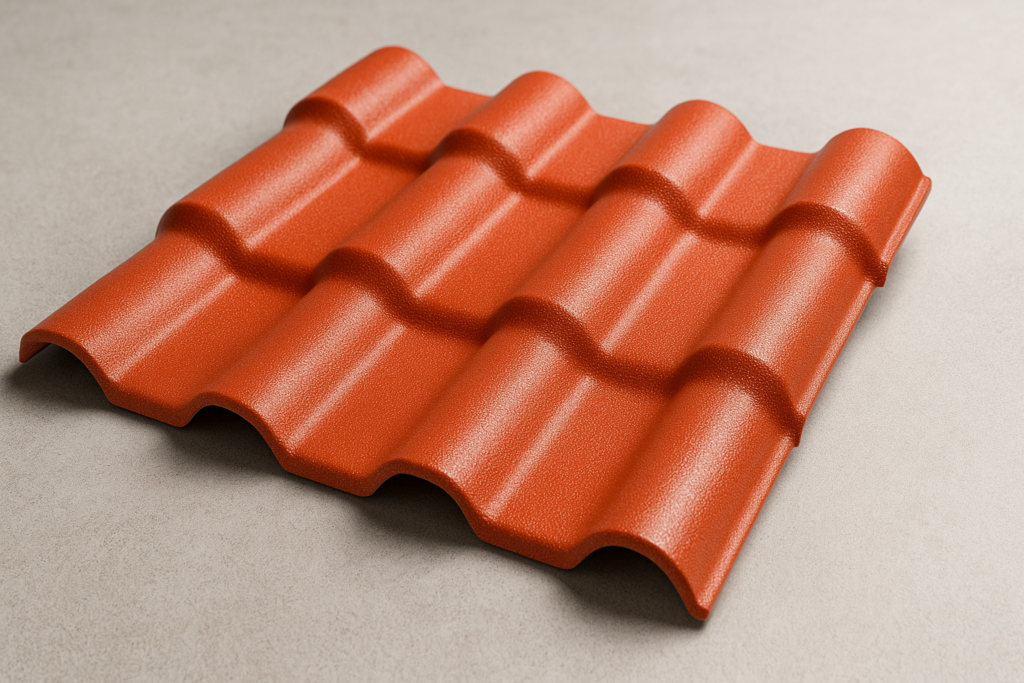
In 2025, Vietnam’s construction market is projected to maintain strong momentum, driven by accelerated urbanization, large-scale industrial park expansion, and ongoing government infrastructure investment. From affordable housing in provincial towns to logistics facilities near major ports, roofing demand continues to diversify in both scale and function. Resin roof tiles, once considered a niche solution, are now being widely adopted as a reliable replacement for traditional clay and metal roofing materials.
This shift is largely climate-driven. Vietnam’s tropical environment—characterized by intense UV exposure, heavy seasonal rainfall, and coastal humidity—requires roofing materials that go beyond basic coverage. Many contractors and distributors are finding that traditional clay tiles are too heavy and fragile, while metal sheets suffer from premature corrosion, particularly in coastal or industrial zones. Resin tiles, especially ASA-based variants, offer a compelling alternative. They are lightweight, easy to transport, and designed to resist UV rays, acid rain, and salt-laden air without fading or cracking.
Through our direct experience working with Vietnamese importers and project managers over the past decade, we’ve seen a clear rise in demand for resin tiles among both private and public sector buyers. What these buyers value most is a product that can reduce installation time, lower long-term maintenance costs, and still meet aesthetic and regulatory expectations. ASA composite resin tiles do just that. With color-stable surfaces, multiple profile options, and resistance to impact and water infiltration, they meet the durability standards expected by modern Vietnamese construction.
More importantly, resin tiles are increasingly being accepted in government procurement channels. With proper certifications like ISO, CE, and SGS, they qualify for public tenders in infrastructure, education, and healthcare projects. For distributors targeting public-sector contracts, this presents a strategic opportunity to differentiate their offerings with certified, climate-adapted roofing solutions.
Duolongtrade, as a long-term resin tile manufacturer serving Southeast Asia, has adapted its production lines to meet these evolving needs. Our products are optimized for Vietnamese projects, offering compatibility with local size requirements, preferred color palettes, and custom packaging options for importers and retail chains alike. Whether you’re a construction wholesaler, a cross-border trade company, or a government project supplier, now is the time to evaluate how resin roof tiles can help you expand market share while improving supply chain efficiency.
By choosing the right resin tile exporter, buyers in Vietnam can position themselves ahead of regional competitors, reduce risks linked to roofing failures, and offer higher value to their clients in a rapidly modernizing economy.
Key Criteria for Choosing a Resin Roof Tile Exporter
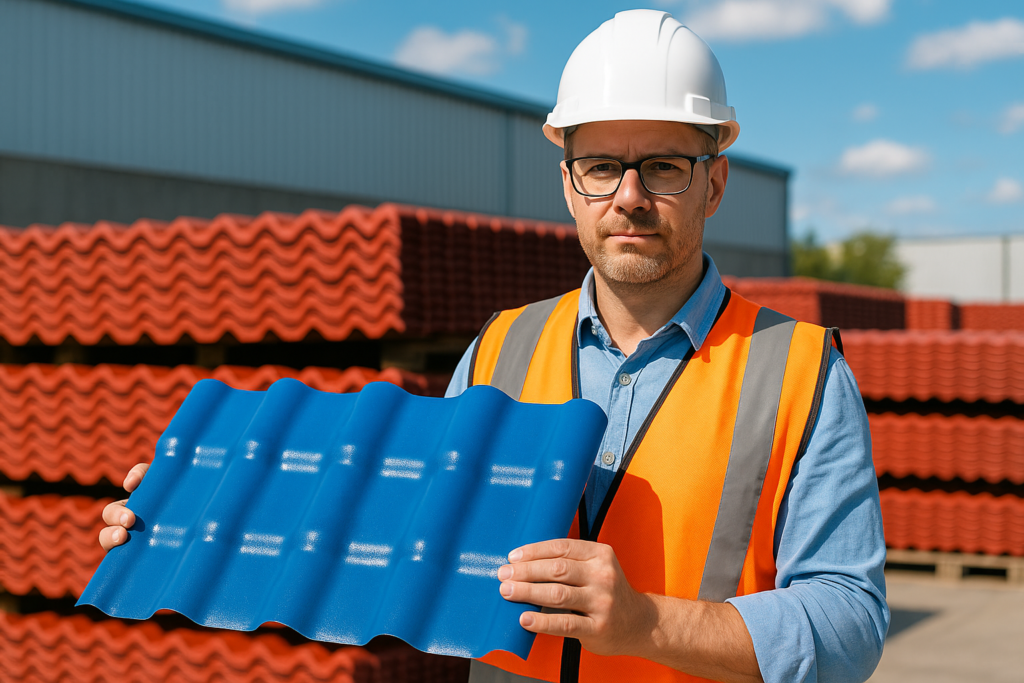
For any Vietnamese importer or construction material distributor considering resin roof tiles, selecting the right export partner is more than a procurement task—it’s a strategic decision that affects cost control, product consistency, and long-term project success. In our experience working directly with Vietnamese buyers, especially those supplying infrastructure projects, industrial parks, or provincial construction markets, the most successful partnerships always begin with three core selection criteria: export experience, certification compliance, and production stability.
Export experience matters because Vietnam’s building material market has its own expectations and logistical nuances. A resin tile manufacturer that regularly exports to Vietnam understands the preferred roofing profiles, popular colors, shipment labeling standards, and even local unloading challenges during rainy season. At Duolongtrade, we’ve shipped to over 100 clients in Southeast Asia since 2015, and we’ve learned firsthand how essential it is to align production planning with port capacity and peak demand seasons. Exporting is not just about moving goods—it’s about delivering the right product at the right time, in a form that your supply chain can absorb and distribute efficiently.
Equally important is certification compliance. Vietnam’s construction projects—particularly those involving public buildings or industrial facilities—are increasingly requiring imported materials to meet formal quality and safety benchmarks. If your supplier cannot provide up-to-date SGS reports, CE conformity declarations, or ISO 9001 documentation, your goods may face clearance delays or even be rejected at customs. At Duolongtrade, our resin roof tiles are certified under international standards and we regularly update documentation packages for buyers handling tenders or applying for distributor licenses. This not only ensures smooth importation, but also strengthens your position when dealing with local contractors, consultants, or project owners.
Lastly, and perhaps most critically, is the exporter’s production capacity and lead time reliability. Whether you’re supplying a 5,000-square-meter warehouse project or distributing to 30 home improvement outlets across southern Vietnam, delays in supply can mean financial penalties, broken contracts, or damaged reputations. Resin tiles may be lightweight, but they require consistent extrusion quality, precise mold control, and well-managed logistics coordination to meet bulk order schedules. Our factory operates with a dual-line extrusion system and maintains buffer inventory of core colors like grey, terracotta, blue, and green to ensure we can dispatch both standard and custom orders in under 15 days—even during high season.
The types of clients who benefit most from working with a direct resin tile manufacturer like Duolongtrade include large building material wholesalers, regional distributors sourcing diversified product lines, cross-border traders needing fast-loading solutions for mixed containers, and construction companies bidding on government or factory roofing projects. What they share in common is the need for dependable, fully-documented, and climate-suitable roofing materials—backed by a factory that understands how to work at scale and deliver with precision.
If you’re looking to build a competitive edge in Vietnam’s roofing supply market in 2025 and beyond, start by evaluating your export partner against these three pillars. The right manufacturer doesn’t just sell tiles—they protect your entire downstream supply chain.
Product Standards and Customization Requirements for Vietnam

When it comes to importing resin roof tiles into Vietnam, understanding the local product expectations is not just helpful—it’s critical. In a competitive and fast-developing construction market like Vietnam, products that don’t meet the precise specifications of local contractors, retailers, or project owners often get rejected, returned, or left unsold. Over the past decade, we’ve worked directly with Vietnamese buyers across multiple segments—from provincial distributors to large-scale project procurement teams—and what we’ve learned is that product adaptation is key to success.
Let’s start with the most requested specifications in the Vietnamese market. In terms of dimensions, the most commonly ordered resin roof tile size is 1130mm (overall width) × 1050mm (effective width), with thickness options typically ranging from 2.0mm to 3.0mm depending on application. For large-scale industrial projects, customers often prefer reinforced ASA+PVC composite sheets with 3.0mm thickness for added durability. As for tile wave types, the Vietnamese market shows strong preference for trapezoidal and Roman curved profiles, as these match local aesthetic expectations and are compatible with standard roofing structures used across urban and rural zones.
Color is another critical factor. Unlike some other Southeast Asian markets that lean heavily toward gray or industrial tones, Vietnamese buyers prefer vibrant, UV-stable colors like terracotta red, deep blue, forest green, and brick orange. These color choices are closely tied to regional architectural preferences, especially in residential and commercial roofing projects. At Duolongtrade, we use high-grade ASA resin with anti-fade protection tested to withstand 10+ years of tropical UV exposure. This is a non-negotiable requirement for many Vietnamese customers who’ve had negative experiences with low-end alternatives fading after just two rainy seasons.
In a tropical monsoon climate like Vietnam’s, product performance matters more than ever. Resin tiles used in this region must endure high humidity, frequent typhoons, and extended direct sunlight exposure. That’s why we design our tiles with triple-layer co-extrusion technology: the top ASA layer provides UV and color protection, the middle PVC layer ensures structural strength, and the bottom layer adds shock resistance and insulation. Our tiles are routinely tested for water absorption rate (<0.1%), load-bearing capacity, and anti-corrosion under acidic rain simulation, all of which are backed by SGS and ISO 9001 certifications.
But what truly gives buyers a competitive edge in Vietnam’s fragmented roofing market is the ability to customize branding and packaging. Many local distributors and wholesalers require OEM logo embossing, private label packaging, and Vietnamese-language installation guides to build stronger brand presence. At Duolongtrade, we offer full OEM support, including logo molding on tile edges, custom carton or pallet packaging, and labeling in Vietnamese, helping our clients differentiate themselves in retail environments and on social media platforms like TikTok and Shopee.
Clients who benefit most from our customization capabilities are those targeting the retail distribution market, hardware chain stores, cross-border online sales platforms, and construction contractors who require branded tender documents. They need more than a product—they need a market-ready roofing solution that speaks the local language, visually and functionally.
In Vietnam, where roofing choices are increasingly influenced by both aesthetic expectations and harsh weather demands, success belongs to those who understand the technical and cultural nuances of product-market fit. The right specifications, the right protection, and the right branding—these are what turn a shipment of resin tiles into a lasting business relationship.
Pricing Structure and Import Cost Breakdown

For buyers in Vietnam considering resin roof tile imports from China, understanding the full pricing structure is essential—not only to secure competitive rates but to ensure accurate budgeting from order placement to final delivery. As a manufacturer with over a decade of direct export experience to Southeast Asia, we’ve supported dozens of Vietnamese wholesalers, project contractors, and retail buyers in building profitable and predictable procurement pipelines. This section breaks down what you really need to know.
Let’s begin with the factory pricing. For standard resin roof tiles—ASA+PVC composite sheets in popular sizes like 1130mm × 1050mm—the FOB (Free on Board) price generally ranges from USD 2.90 to USD 3.70 per square meter, depending on the thickness, color pigment, UV resistance level, and packaging method. This is based on full container loading (FCL), typically a 20-foot container, which holds approximately 4,000 to 4,500 square meters of tile, depending on the tile profile and stacking height. For buyers seeking CIF (Cost, Insurance and Freight) to major Vietnamese ports such as Ho Chi Minh City or Hai Phong, the landed cost usually ranges between USD 3.60 to USD 4.50 per square meter, inclusive of ocean freight and marine insurance.
However, the real landed cost goes beyond factory and freight. Based on current Vietnamese import regulations (updated through 2024), buyers should factor in a 5%–10% import duty, depending on HS code classification and trade agreements in effect at the time of entry. In addition, Value Added Tax (VAT) of 10% is charged upon customs clearance. Depending on port handling fees, customs brokerage, and local inland transportation to warehouses, an additional USD 0.15–0.25 per square meter may be added. Understanding these local costs upfront is vital to avoid surprises during delivery.
What gives larger buyers a true advantage is how they structure their purchasing volume. At Duolongtrade, we offer tiered pricing strategies based on square meter volume per order, repeat purchase frequency, and payment terms. For example, clients ordering over 8,000 square meters per month are eligible for long-term partner pricing, with direct discounts on high-margin colors like blue and red, as well as free logo molding or partial packaging customization. For distributors planning to stock multiple roof profiles—like both Spanish and trapezoidal curves—we can offer mixed-load pricing within the same container, saving on freight and warehouse turnover.
Additionally, buyers involved in government projects or national retail chains often request fixed annual pricing contracts. We support this model through quarterly production allocation and reserved raw material inventory, helping reduce exposure to sudden PVC resin price spikes or freight rate fluctuations. This approach is especially useful for clients handling time-sensitive projects or supplying across multiple provinces.
The buyers who benefit most from this structured pricing and import clarity are regional building material distributors, mid-sized construction material wholesalers, and cross-border sourcing managers working for retail networks or private development companies. These clients not only gain transparency in cost but also predictability in their supply chains—two factors that directly impact profitability in Vietnam’s competitive construction sector.
If you’re planning to import resin tiles for the first time or looking to scale your sourcing strategy in 2025, make sure your supplier can offer a clear, documented cost structure, including container optimization plans, export documentation guidance, and support in forecasting local tax impact. At Duolongtrade, we view transparent pricing not just as a quote—but as a tool to build trust, improve margins, and support long-term growth for our clients.
Recommended Resin Tile Profiles for Vietnam Projects
Selecting the right resin tile profile for a project in Vietnam is not just a matter of aesthetics—it’s a technical and financial decision that directly affects roof performance, installation speed, and lifecycle cost. Based on our extensive experience supplying resin roof tiles to construction buyers across Vietnam, we’ve identified key profile types that are best suited for the country’s three dominant project categories: industrial facilities, residential buildings, and public infrastructure.
For industrial facilities such as warehouses, factories, and logistic centers, durability and load resistance take priority. These structures often cover thousands of square meters, require rapid installation, and must endure long-term exposure to heat, humidity, and potential chemical fumes. In these cases, we recommend the high-strength corrugated wave profile, typically produced with 3.0mm ASA+PVC composite thickness, designed to withstand mechanical stress and extreme weather. The wave structure provides optimal water drainage during Vietnam’s rainy season and resists sagging on wide-span installations. Clients such as export zone developers and industrial contractors favor this profile for its balance between strength and cost-efficiency.
In residential roofing projects, especially in suburban and tier-two city developments, customers place greater emphasis on visual appearance, heat insulation, and long-term color stability. Here, the lightweight ASA composite resin tile in Spanish curve or trapezoidal profile is most effective. These tiles are available in vibrant, UV-stable colors like terracotta red, forest green, and sky blue—well aligned with local architectural preferences. With an average thickness of 2.5mm and a built-in anti-UV top layer, these tiles reduce rooftop heat buildup and remain color-stable for 10 years or more. This makes them a preferred option for home developers, village house suppliers, and regional real estate builders who want aesthetic flexibility without compromising structural integrity.
For government and institutional projects—schools, healthcare centers, public housing, and community buildings—the criteria shift toward compliance, safety, and long service life. These projects typically require CE-certified resin tiles with documentation that meets procurement audits. The ideal solution is a long-lifespan, impact-resistant resin tile in standardized profiles with support for anti-slip textures and fire-retardant additives if required. At Duolongtrade, our export lines are fully equipped to provide certification support, batch traceability, and packaging formats suitable for government tender deliveries. Buyers working with ministry-approved contractors or bidding on public infrastructure packages benefit most from this profile type.
The types of clients who typically seek profile recommendations and technical customization include construction materials distributors, government project procurement teams, regional building contractors, and cross-border sourcing agents. These clients understand that selecting the wrong profile can lead to costly rework, premature roof degradation, or failed inspections. That’s why we offer profile matching consultations during the inquiry stage, helping buyers align their product selection with end-user needs.
A properly selected tile profile not only improves roof performance—it can also reduce installation time by up to 20%, minimize warranty claims, and strengthen a supplier’s credibility in local markets. Whether you’re stocking for regional sales or bidding on a complex multi-building project, aligning the right profile with the right function is one of the most important decisions you can make in Vietnam’s roofing industry.
Common Import Challenges and How to Avoid Them

Importing resin roof tiles from China into Vietnam can be a smooth and profitable operation—when planned correctly. But for buyers unfamiliar with the process or working with inexperienced suppliers, it’s surprisingly easy to encounter delays, damaged goods, or unexpected costs. At Duolongtrade, having supported over 100 export shipments to Southeast Asia, we’ve encountered nearly every challenge Vietnamese buyers face in real-world scenarios. More importantly, we’ve helped clients avoid them before they happen.
One of the most common issues is customs clearance delays, which often stem from missing or incorrect documentation. For resin tiles, Vietnamese customs typically require a complete and consistent set of export papers: packing list, commercial invoice, certificate of origin (Form E if under ASEAN–China trade agreement), and material safety data sheet (MSDS) if applicable. In many cases, delays are caused by suppliers who fail to issue the certificate of origin in time, or who mismatch HS codes on the invoice and packing list. We solve this by assigning an export document specialist to every shipment and ensuring all certificates are issued before loading begins. Clients working on tight project deadlines—such as school renovations or factory roof installations—particularly benefit from this attention to compliance.
Another frequently overlooked challenge is improper transport packaging, especially for resin tiles with high gloss finishes or large surface areas. When packed without adequate padding or placed directly on wooden pallets without plastic wrap, tiles can arrive with corner damage, surface scratches, or warping. In Vietnam’s high-humidity ports, this risk is even greater during the rainy season. That’s why we upgraded our packaging system in 2023, switching to five-layer reinforced cartons, edge protection strips, and water-resistant shrink wrap for full-pallet loads. For clients importing full containers for resale, this reduces after-delivery complaints and returns by over 90%.
Perhaps the most underestimated issue—especially among new importers—is unclear communication with Chinese suppliers. Unlike domestic purchases, international procurement requires precise, written communication of technical specifications, product application context, and branding expectations. For example, telling a supplier “red tile” may result in a completely different shade from what is used in southern Vietnamese residential roofs. Similarly, if you need logo molding or Vietnamese-language instructions included, you must confirm these at the proforma invoice stage. At Duolongtrade, we use a structured inquiry checklist that captures details like tile profile, target market usage, packaging preference, language for labels, and required certificates, ensuring nothing is missed. We also provide sample confirmation before final production to avoid misunderstandings.
Buyers who benefit most from this level of detail are regional distributors, project-based importers, and buyers representing retail brands who cannot afford shipment errors or post-arrival disputes. For them, every delay or defect directly impacts profit margins, project timelines, or customer satisfaction. By working with a manufacturer who understands these risks—and proactively prevents them—buyers gain not just a product, but operational peace of mind.
The takeaway is simple: the quality of your product is only as good as the process that delivers it. From correct paperwork to impact-resistant packaging to clear bilingual communication, avoiding these common import challenges can protect your margins, your timeline, and your long-term market credibility in Vietnam.
Case Study: How a Vietnamese Distributor Reduced 15% Cost by Switching to Resin Tiles

In 2024, a mid-sized Vietnamese building materials distributor based in Binh Duong province approached our team with a problem that had been affecting their bottom line for nearly two years. The company had been importing metal roofing sheets from a variety of suppliers in China and South Korea to service residential housing projects and factory installations across southern Vietnam. However, rising freight charges, material rust complaints in coastal areas, and inconsistent lead times were undermining their growth. They were looking for a roofing solution that could lower their landed cost per square meter, improve product shelf life, and allow them to offer differentiated products under their own brand.
After an initial consultation and site analysis, we recommended switching to ASA resin roof tiles, specifically our 2.5mm trapezoidal profile, known for its high weather resistance, color stability, and lightweight design. Compared to metal sheets, resin tiles offered a 60% reduction in product weight, which translated to lower shipping volume costs. More importantly, resin tiles eliminate rust-related returns—particularly important for this client, whose coverage areas include port cities like Vung Tau and Can Tho.
We worked closely with their procurement team to optimize the first 20-foot container load. This included:
- Mixed colors (terracotta and deep blue) tailored to local residential demand
- Vietnamese-language labeling and branding on each tile pack
- Reinforced five-layer carton packaging for their warehouse racking system
- Complete documentation set (CO, Form E, ISO certificate, product data sheet)
By streamlining these elements before production, the client avoided the most common pitfalls such as customs delays, color mismatches, and damaged goods. The final landed cost per square meter—including VAT and port clearance—was 15.2% lower than their previous shipments of galvanized steel sheets.
Beyond the savings, the distributor gained new business in two key ways. First, the visual appeal and variety of ASA tile profiles helped them secure supply contracts with a regional real estate developer launching 200+ units of row houses. Second, they successfully entered three new provinces where competitors had limited presence, using our tiles as a “new product line” campaign in their B2B dealer network.
This case illustrates that the cost advantage of resin tiles isn’t just in raw material pricing. It comes from sourcing intelligently—working with a manufacturer who understands export documentation, adapts packaging for your logistics, and supports OEM brand building. Distributors, especially those operating across multiple Vietnamese provinces or supplying to both residential and industrial buyers, are ideal partners for this type of cooperation. They need more than a product—they need a supply solution that reduces risk, enhances brand identity, and delivers consistent profitability over time.
At Duolongtrade, our role wasn’t just to provide tiles. It was to help this distributor restructure how they approached procurement—using our factory knowledge, export experience, and packaging systems to deliver a market-ready product that outperformed their expectations.
Checklist for Evaluating Resin Tile Exporters Before Placing an Order
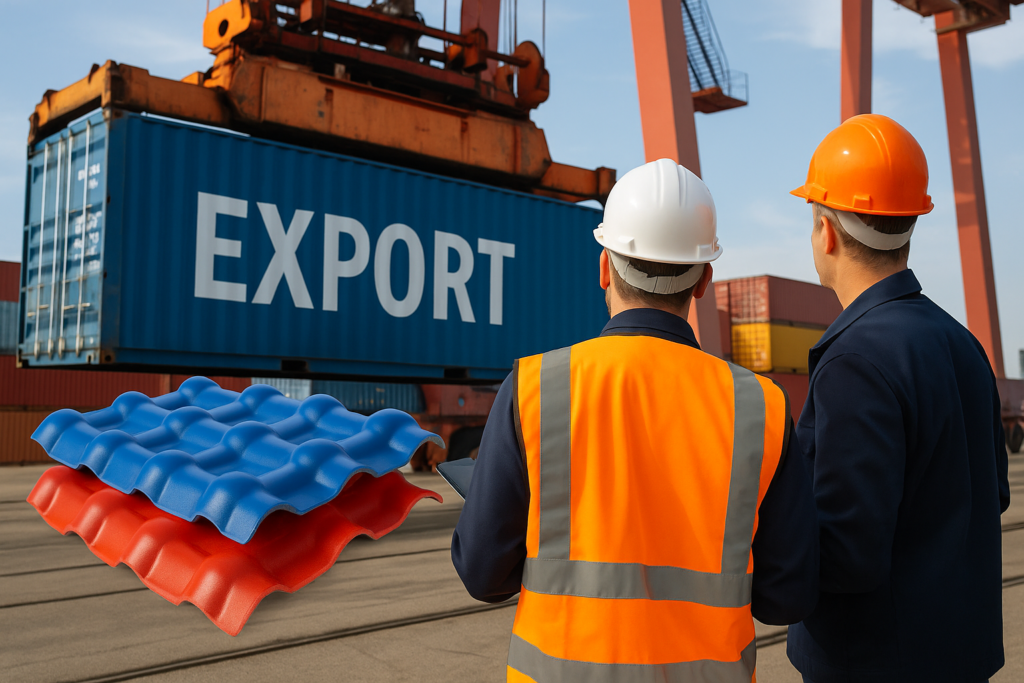
In the roofing supply business, the quality of your product is only as strong as the supplier behind it. Whether you’re an experienced building materials importer or preparing for your first container shipment into Vietnam, choosing the right resin tile exporter is not just about pricing. It’s about long-term security, technical credibility, and service readiness. Based on our direct experience as a factory supplying hundreds of Southeast Asian buyers, we’ve put together a practical checklist to help you evaluate any resin tile exporter before signing that first PO.
Start with their export experience and client track record. A factory that has been producing resin tiles for over five years, but only started exporting last year, is not the same as a supplier with a solid history of international shipments. You’ll want a partner who not only understands resin material and extrusion processes, but also knows how to handle export documentation, multilingual communication, and port compliance. At Duolongtrade, we’ve served over 120 clients in Vietnam, Malaysia, and the Philippines since 2015—ranging from government contractors to regional wholesalers. Our factory team doesn’t just produce; we manage timelines, documentation, and destination-specific packaging to avoid port-side surprises.
Second, check if the exporter can provide samples and technical documentation before bulk production. For resin tiles, this means more than just a physical tile. A reliable exporter should give you material composition reports, SGS or ISO certification, data sheets on UV resistance and tensile strength, and—if needed—lab testing for color fade or heat tolerance. Sample testing allows you to verify whether the product meets Vietnamese roofing standards in real conditions. For clients planning to participate in public tenders or supply hardware chains, this stage is essential. At Duolongtrade, we not only provide free samples to serious buyers but also include full test data and installation guidelines in both English and Vietnamese.
The final and often overlooked factor is the ability to enter into long-term supply agreements with support mechanisms. A trustworthy supplier should be able to lock in pricing models for regular volume buyers, define lead time commitments, and offer after-sales service like shipment tracking, claims response, and reorder coordination. For example, buyers distributing to multiple provinces or supplying government projects often need assurance of stock continuity, especially during rainy season demand spikes or resin raw material price fluctuations. Our long-term clients benefit from guaranteed raw material allocation, fixed quarterly pricing, and tailored packaging contracts—including OEM support for branded retail programs.
The buyers who benefit most from applying this checklist are regional distributors, private-label product developers, and cross-border trade companies that depend on stability, documentation accuracy, and long-term shipment planning. These clients can’t afford to switch suppliers every three months or gamble on uncertain product specs.
Evaluating a resin tile exporter isn’t just a formality—it’s a risk filter. It protects your cash flow, your customer relationships, and your brand’s market reputation. And when you choose a partner who checks all the right boxes, you’re not just placing an order. You’re laying the foundation for years of sustainable business growth.
Contacting Verified Resin Roof Tile Exporters in China
Finding the right resin tile exporter is only the beginning. Reaching out to them effectively—and knowing how to evaluate their response—is what truly sets reliable buyers apart. In a market flooded with intermediaries, trade agents, and resellers, getting in touch with verified, factory-direct exporters is the fastest way to reduce procurement risk, control pricing, and secure consistent supply.
At Duolongtrade, we’ve spent years working with buyers who’ve previously lost time and money due to poor communication, delayed responses, and unclear ownership of production. The common feedback is always the same: “We thought we were working with the factory, but ended up with a trading company.” To avoid this, the first step is to directly contact manufacturers with proven export records. Verified exporters should be able to immediately provide you with:
- Their factory location and core production line details (e.g., monthly tile output capacity, extrusion equipment)
- A list of target markets already served (Vietnam, Indonesia, etc.)
- At least three export references or images of recent shipments
- Basic compliance documents (ISO, SGS, CE) upon request
- Business licenses and a clear company domain-based email (not just Gmail or Alibaba chat)
When you contact a supplier, how they respond within the first 48 hours tells you a lot. A professional exporter will ask for your usage scenario (resale, project, government), expected volume, target color/profile, port of delivery, and branding requirements. If they only send back a one-line price or push you to confirm order size without understanding your needs, that’s a red flag.
At Duolongtrade, every inquiry is handled by a trained export manager—not a bot or commission-based agent. We first ask detailed questions to understand the exact application of the tile. For example, are you building for residential roofs in Can Tho, or supplying industrial sheds in Da Nang? From there, we’ll recommend the most suitable profile, share real production photos, and offer a customized quotation based on your intended container configuration. If needed, we provide a video walkthrough of our packaging line, including how we wrap tiles for long-haul coastal shipments and load pallets for container optimization.
The types of buyers who gain the most from direct communication include mid-size importers, regional trade firms, real estate suppliers, and hardware retail chain procurement teams. These clients typically handle logistics planning themselves or work with a fixed freight forwarder and need detailed coordination with the manufacturer at every milestone—from mold confirmation to shipping documents. They value responsiveness, technical clarity, and transparency.
If you are preparing to attend a trade show like Vietbuild or planning to consolidate multiple SKUs into one shipment, contacting the right exporter ahead of time also helps secure production slots in advance. Many top factories fill their schedules quickly, especially during Q2 and Q4 peak building seasons.
Ultimately, reaching the right supplier is not just about getting a price. It’s about finding a partner who listens, documents clearly, and delivers with consistency. If your business depends on resin tiles, then your first conversation with a verified exporter like Duolongtrade could be the beginning of a far more profitable supply chain.
For Vietnamese importers, regional building material wholesalers, or construction firms seeking a dependable resin tile supplier, this article delivers a clear roadmap. It explains how the rise of resin tiles aligns with Vietnam’s construction needs in 2025—from handling heavy rain and humidity to meeting the aesthetic and functional expectations of both residential and public projects. The guide outlines how to choose an experienced, document-ready exporter; how to confirm product customization options (such as profiles, packaging, and OEM support); and how to calculate true landed costs including duties and logistics.
What makes this content especially useful for procurement teams is the focus on practical execution. It breaks down communication pitfalls, common packaging and customs challenges, and introduces realistic pricing models that scale with volume and contract terms. Case examples show how Vietnamese distributors have already benefited by switching to resin tiles—reducing costs and expanding their market. Whether you’re managing multi-project sourcing or launching a new product line for your distribution network, this resource helps you reduce risk, improve supply chain predictability, and confidently partner with trusted resin tile manufacturers like Duolongtrade.