Roof problems in livestock buildings are rarely “random,” and they’re rarely caused by the sheet alone. Many sites call it a leak, but the first culprit is often condensation: warm, humid air rises, the underside of the roof cools at night, and moisture turns into droplets that fall onto bedding, walkways, and feed zones. The result is a wetter building, stronger odors, higher bedding use, and more cleaning pressure—sometimes even when the roof has no holes.
The second pattern is repeatable failure at the small points: screws, sealing washers, overlaps, ridge/eave edges, and penetrations. In an ammonia-heavy, always-damp environment, these parts age faster than most people expect. Once a washer loses elasticity or a fixing point starts to corrode, tiny leaks return again and again, and “more sealant” becomes a routine expense.
This article breaks down where livestock roofs typically fail, why PVC roof tile is commonly selected in agricultural projects, what to verify before you buy, and which installation details actually control moisture resistance and long-term cleanability.
Farms and livestock buildings fail roofs in predictable ways
In livestock buildings, a roof is dealing with moisture almost nonstop, and not in the “normal warehouse” way. Rain is the obvious part, but the constant problem is indoor humidity. Animals breathe out moisture, manure and wet bedding add more, and warm air rises. When that humid air hits a cooler roof underside, you get condensation. Farmers often describe it as “it rains inside at night” even when the roof is not punctured. That water drips onto bedding, feed areas, and walkways, which pushes up bedding consumption, smell, and cleaning frequency.
The second farm-specific stress is chemistry. Ammonia and other gases from manure don’t just create odor—they speed up corrosion and aging of anything that isn’t protected. On many barns, the first failure isn’t the sheet itself but the “small parts”: screw heads, washers, overlap zones where dirt stays wet, and edges where water sits longer. If those points start to fail, you get tiny leaks that keep returning because the environment never gives the roof a “dry season” to recover.
A third issue people underestimate is the working rhythm of farms. Roofs get hit by frequent washdowns, disinfectants, and sometimes accidental high-pressure spraying near eaves and ridges. That means even a small weakness in sealing, fastener choice, or overlap detailing will show up fast. In other words, livestock roofs don’t fail randomly; they fail in the same places again and again, and you can usually predict those places before installation.
Why PVC roof tile is commonly chosen for agricultural roofs
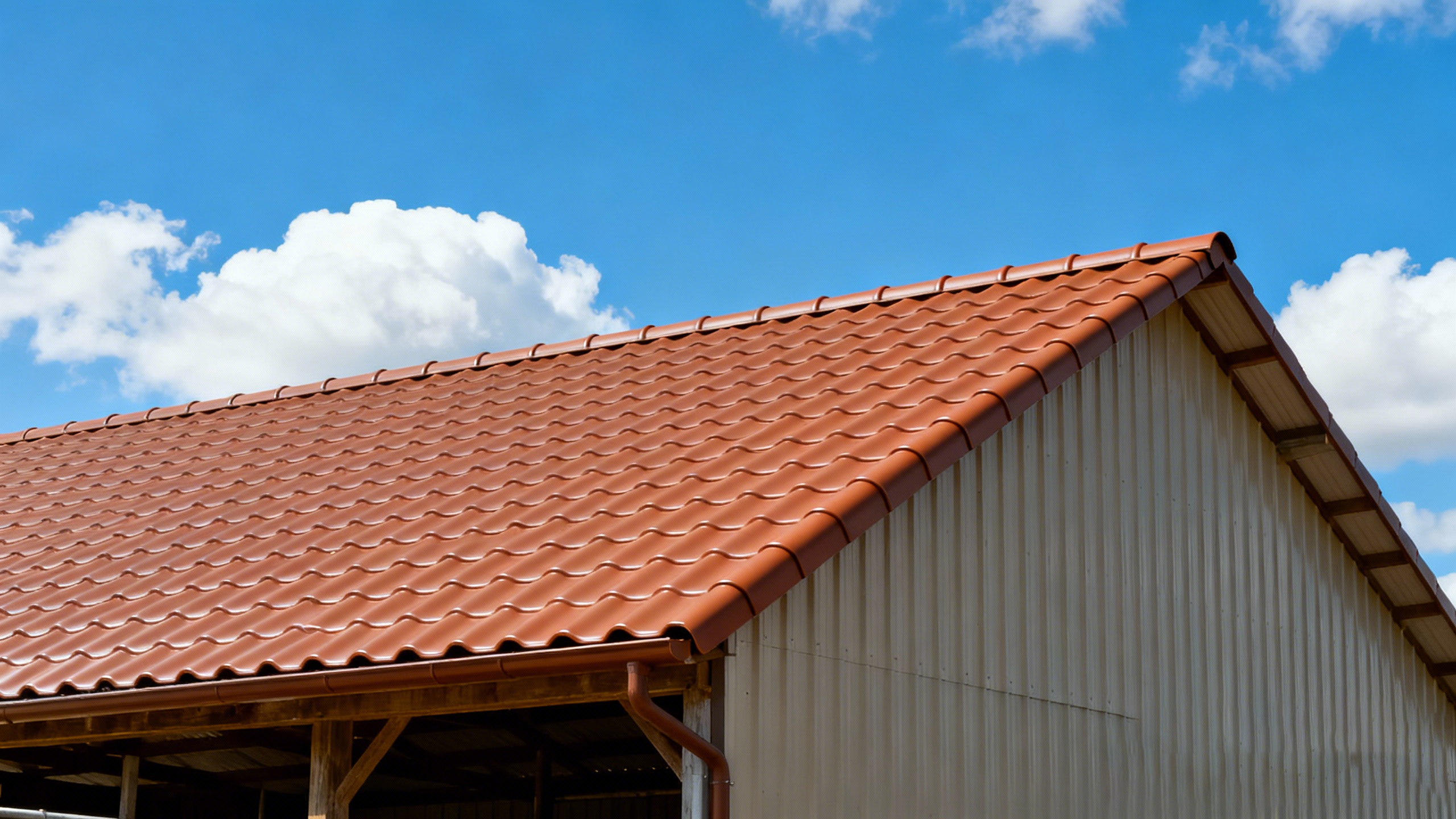
PVC roof tile is often chosen in farms because it avoids the most common livestock-roof pain: rust-driven failure. PVC doesn’t rust, so the sheet itself isn’t going to develop corrosion pits the way metal can in ammonia-heavy buildings. In practical farm terms, this reduces the “creeping deterioration” that starts around fixings and spreads after a couple of wet seasons.
Moisture behavior matters too. PVC is generally low water absorption, and it doesn’t rot. That helps in buildings where humidity stays high and surfaces are washed regularly. Another reason farm owners like it is cleanability. A smoother PVC surface tends to release grime more easily than rough, porous materials, so wash time goes down and you can get back to a visually clean finish with less effort. That’s not cosmetic on farms; it supports routine hygiene and makes it easier to keep a consistent sanitation schedule.
From our manufacturing side, what we see is that PVC roof tile performs best in agriculture when buyers treat it as a system choice rather than a “cheap sheet” choice. The sheet has to match the environment, but the real farm performance also depends on the right UV formulation, the right profile strength, and the right accessory package that doesn’t become the weak link. When those are aligned, PVC roof tile is a practical, low-maintenance option for many poultry, pig, dairy, and general livestock buildings.
What to check before you buy, so it performs like you expect
If you want a roof that lasts in a farm environment, the first check is basic but non-negotiable: thickness consistency, unit weight, and profile design. Two PVC sheets can look similar in a photo and behave very differently on a roof after heat, cold, and wind load. Ask for real dimensional data, tolerance range, and recommended purlin spacing for the profile you’re buying. This is where experienced contractors will tell you the truth: a roof that feels “too flexible” during installation usually becomes a roof that needs more attention later.
Next is UV durability. PVC used outdoors must be stabilized for sunlight exposure. In high-sun areas, poor UV resistance shows up as fading, chalking, and surface embrittlement earlier than expected. A serious supplier should be able to provide a technical datasheet that explains the UV approach and states the performance expectations in a way you can compare across offers. If a supplier only says “UV proof” without measurable information, that’s a warning sign.
Then come the farm-specific details that decide whether you get leaks. Fasteners and washers must match livestock exposure. Ammonia and constant moisture are harsh on low-grade metal parts, and once washers lose elasticity or corrode, water finds a path. Also confirm the supplier can provide matching ridge caps, flashings, closures, and trim pieces for the same profile. On farms, a lot of recurring leaks are not “material failure,” they’re mismatch failure: wrong ridge cap shape, poor closure fit, or improvised flashing around fans and vents.
Finally, ask for documentation that a real manufacturer can provide: batch traceability, inspection standards, and packing/loading method. Damage in transport or poor stacking can create micro-cracks or deformation that only shows up when sheets are fixed down and stressed by temperature changes. Good packaging is part of roof performance, not an afterthought.
Moisture resistance depends on installation details, not slogans
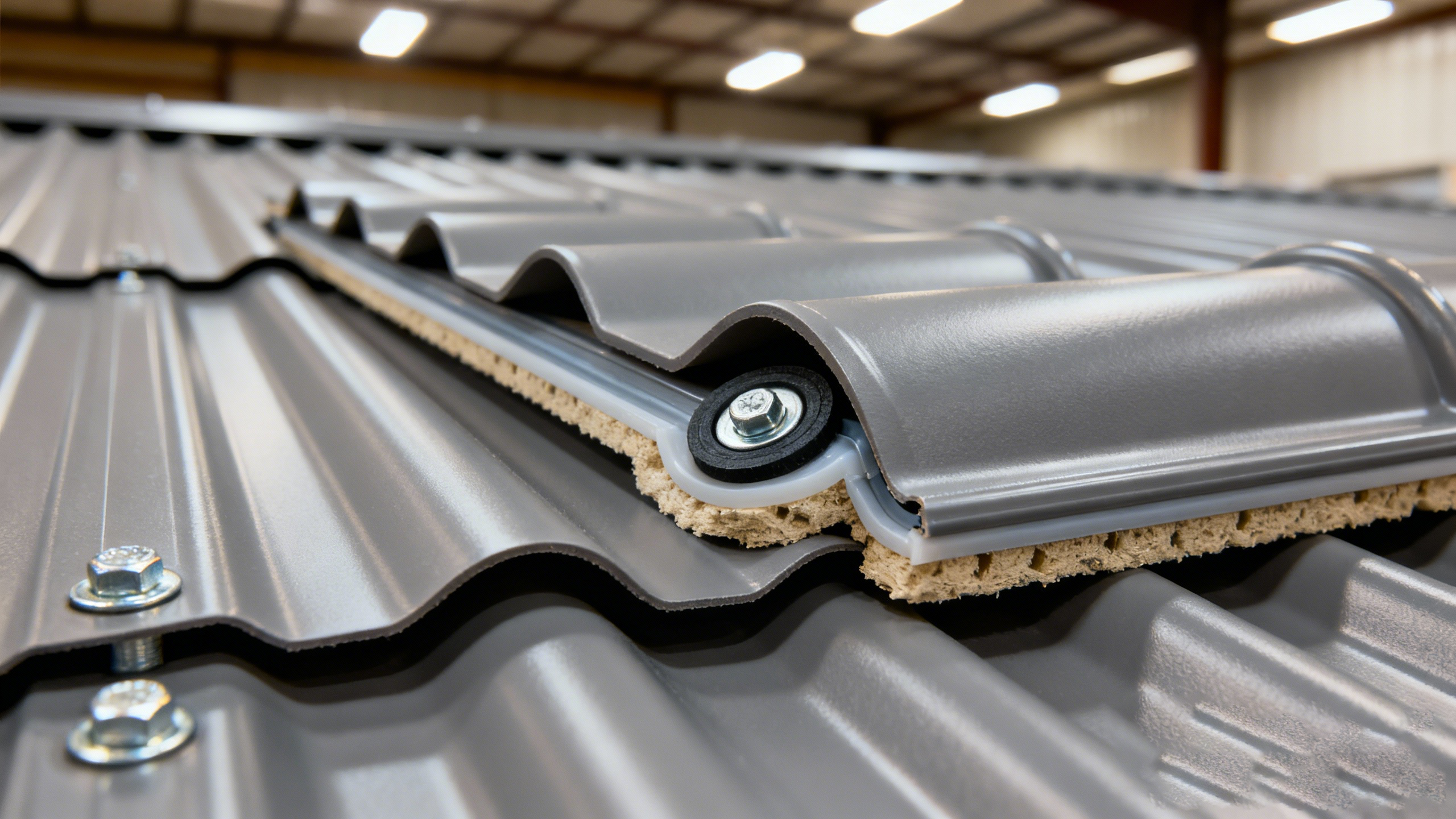
A moisture-resistant sheet still needs correct installation to stay dry long term. Slope and overlap are the basics. Farms often prefer low slope to reduce structure cost, but pushing slope too low increases standing water risk and makes wind-driven rain more likely to work under laps. Dirt and organic residue also accumulate more in flatter lap zones, and once that area stays wet, sealing points degrade faster.
Fastening pattern and screw placement are equally important. PVC, like other roofing materials, moves with temperature. If screw spacing is inconsistent or screws are over-tightened, the roof can “work” against itself over time. That is how you get elongated holes, stressed washers, and seam gaps that appear after a year or two rather than immediately. Good installers treat screws and washers as sealing hardware, not just “fix it down and move on.”
Penetrations deserve special attention on livestock buildings. Fans, chimneys, vents, and pipes are common, and each penetration is a water pathway if it’s not flashed properly. A reliable approach is to use purpose-fit flashing and mechanical fixing, then seal as the final step, not as the only step. If a contractor’s plan is basically “we’ll add more sealant,” you can expect repeat maintenance.
Condensation control is the other half of moisture resistance. Agricultural engineering guidance and university extension materials repeatedly emphasize that ventilation is a moisture management tool, not just a temperature tool. When ridge ventilation, side inlets, and fan layout are designed together with the roof, indoor humidity drops, and the “mystery dripping” under the roof often improves even without changing materials. In real farm life, that matters because it reduces wet bedding and makes cleaning easier.
Easy cleaning is measurable value, not a vague benefit
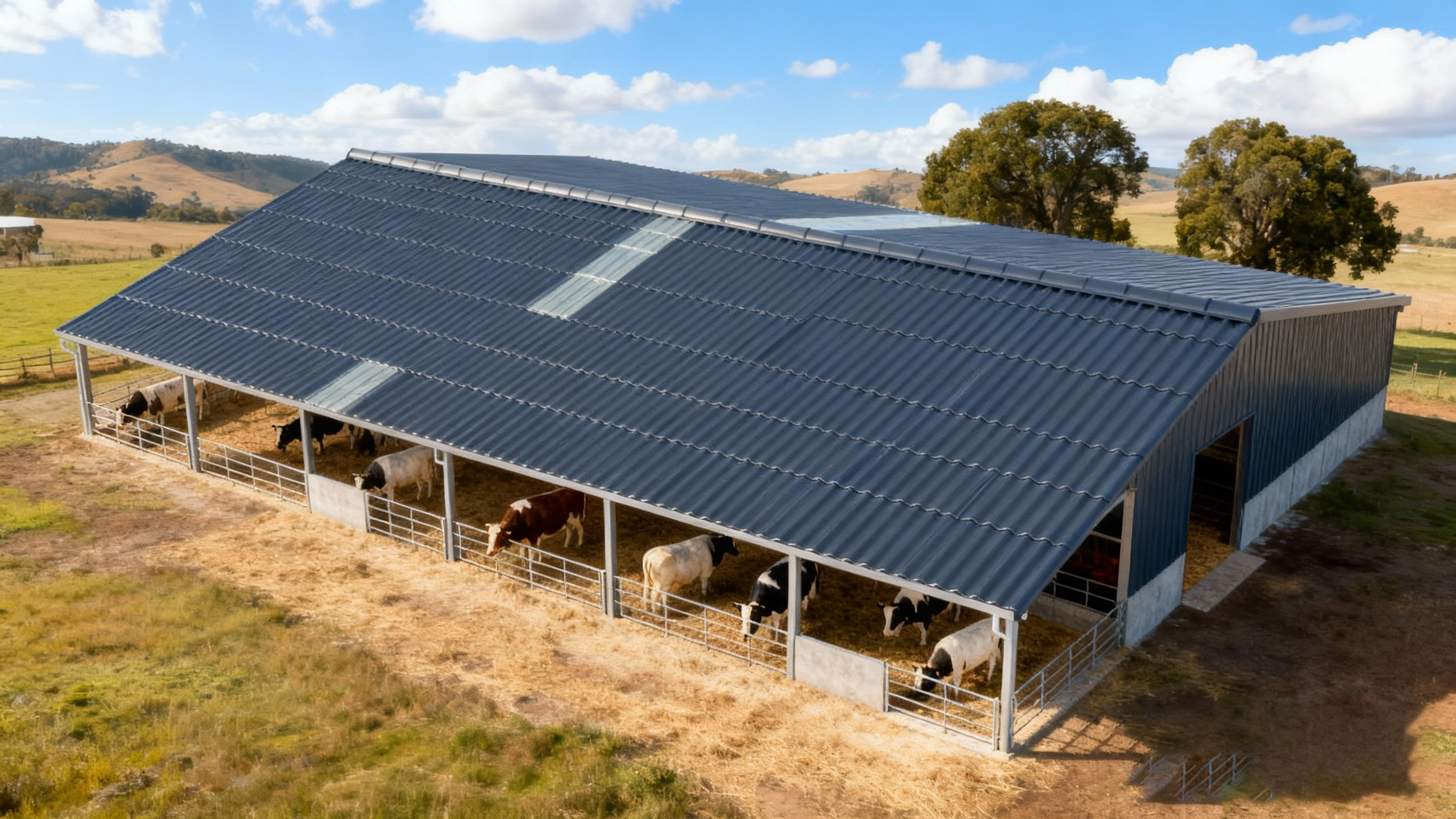
In livestock operations, cleaning is labor, water, downtime, and compliance. Easy cleaning means you remove organic film faster and more consistently, without escalating chemical strength or wash pressure every month. A smoother PVC surface helps because it’s less likely to hold grime in pores, so dirt releases more readily. Over time, this can reduce staining and odor retention, especially in areas where mist, dust, and humidity combine into a sticky layer.
There’s also a practical safety angle. When roof surfaces stay damp and dirty, it contributes to a generally “wet” building environment, which can increase slip risk in service areas and make equipment surfaces harder to keep clean. A roof that supports a drier, cleaner interior helps the whole routine work better, from bedding management to maintenance schedules.
Cleaning method matters for service life. High-pressure washing directly at overlaps, ridges, and fasteners can shorten the life of washers and force water into seams. A good farm roof plan treats seams and fixings as areas to wash sensibly rather than aggressively. Chemical choice matters too. Disinfectants vary widely, and not all cleaning chemicals are friendly to every sealing component. A trustworthy manufacturer should be able to tell you what cleaning agents are commonly used safely, what concentrations are reasonable, and what to avoid, based on material compatibility rather than guesswork.
Who benefits most from working with a real PVC roof tile manufacturer
Farm owners and agricultural companies benefit when they want fewer surprises after the first rainy season and fewer repairs after the first year of washdowns. If you’re building or upgrading poultry houses, pig barns, dairy sheds, calf housing, or feed storage, the roof should be selected for humidity, ammonia exposure, and routine sanitation. A manufacturer-level supplier can support you with correct sheet selection, matching accessories, and an installation method that fits your building layout.
Contractors and farm builders benefit because consistency reduces call-backs. When sheet dimensions are stable, profile fit is correct, and accessories match, installation is faster and problems are easier to avoid. Many leak complaints trace back to small inconsistencies: a ridge cap that doesn’t sit tight, a closure that doesn’t seal, or fasteners that weren’t specified for agricultural corrosion. Manufacturers that build for repeat projects usually have clearer standards for these details.
Distributors and importers benefit when they serve agricultural markets that ask direct questions. Farm buyers don’t want vague promises; they want thickness, unit weight, overlap guidance, fastener specification, and a clear idea of how the roof behaves under sun and washing. A real manufacturer can provide datasheets, batch traceability, stable packaging, and a steady accessory supply so the distributor isn’t forced to “mix and match” parts later.
On the trust side, here’s what “real and professional manufacturer” looks like in practice: consistent formulation control, routine dimensional checks, traceable production batches, and a complete accessory system that is designed to work together. That’s what reduces risk for the buyer. In farms, the roof is not a place to gamble, because the cost of downtime, wet bedding, and repeated repairs usually exceeds any small savings on purchase price.
If you’re sourcing roofing for livestock buildings, you’re not really buying “sheets”—you’re buying a system that must stay stable under humidity, ammonia exposure, thermal movement, and frequent washdowns. Price matters, but consistency and proof matter more. Start by verifying batch-to-batch stability: thickness tolerance, unit weight, and dimensional accuracy. Confirm the profile is designed for the required wind and load conditions, and that the supplier provides a clear purlin spacing recommendation backed by data. For outdoor performance, ask for UV/weathering information you can compare across suppliers—avoid offers that rely on vague “UV-proof” claims.
Then focus on where failures actually start: screws, sealing washers, overlaps, ridge/eave edges, and penetrations. A reliable supplier should specify corrosion-appropriate fasteners and washers for livestock environments, provide matching accessories for the same profile (ridge caps, flashings, closures, trims), and supply installation guidance that covers overlap length, screw placement, and penetration flashing methods.
Finally, look for process control: batch traceability, inspection standards, and robust packing/loading practices. In farm projects, repeat repairs and downtime often cost more than the initial price difference.