

Winter across North America presents two persistent challenges for homeowners: destructive ice dams at the roof edge and chronic dampness in below-grade spaces. These issues share a common origin—inadequate thermal and moisture protection.Extruded Polystyrene (XPS) foam insulation addresses both problems through its integrated performance characteristics. With a consistent R-value of 5 per inch and exceptional moisture resistance (≤0.3% water absorption by volume per ASTM C272), XPS creates a continuous barrier that maintains stable temperatures and blocks moisture migration.
Temperature Differences Create Perfect Conditions
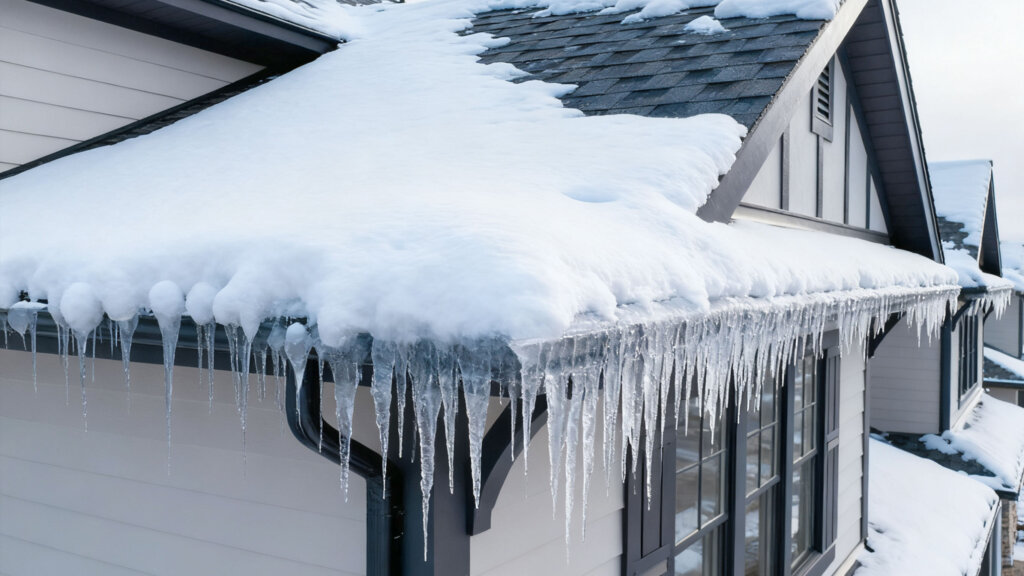
Ice dams form through precise physical processes.
When attic temperatures rise above outdoor levels, snow on the roof begins to melt unevenly.
US Department of Energy research shows that when roof surface temperature differences exceed 5°C, the probability of ice dam formation increases by 300%.
Here’s how it happens step by step
Indoor heat (around 21°C/70°F) seeps into the attic through weak insulation spots
Roof surface temperatures rise above freezing
The bottom layer of snow melts, and water flows toward colder eaves
Water refreezes at the eaves, forming ice dams
The cycle continues, making ice dams grow larger
Why Traditional Insulation Falls Short
Common insulation materials like fiberglass and cellulose have significant limitations:
Fiberglass loses up to 40% of its insulating value in damp conditions
Cellulose can absorb up to 25% moisture, completely losing its effectiveness
Both materials tend to settle over time, creating thermal bridges
The Real Damage Ice Dams Cause
Fiberglass and cellulose soak up moisture and lose insulation power. XPS stays dry and effective, even in wet winters.
The consequences are often worse than expected
- Repair costs: $3,000-$8,000 on average
- Structural damage: rotting roof decking, damaged ceilings
- Safety risks: electrical system shorts, mold growth
Ice dams happen when your attic gets too warm. Snow melts, then refreezes at the roof’s edge. XPS insulation keeps the roof temperature even—stopping that cycle before it starts.
How XPS Prevents Ice Dams
Continuous Insulation Principle
XPS panels create an unbroken thermal barrier that solves roof temperature variations:
Consistent R-value of 5 per inch
Eliminates thermal bridging common with traditional materials
Maintains even temperature distribution across roof surfaces
Closed-Cell Structure Advantages
- XPS manufacturing creates a unique cellular structure:
- 3-5 million individually sealed air cells per cubic centimeter
- Over 98% closed-cell content
- Effectively blocks heat transfer and moisture penetration
- Proven Performance
Testing data from the Canadian National Research Centre shows:
XPS-insulated roofs maintain surface temperature differences below 2°C
Stable performance even at -30°C (-22°F)
Service life exceeding 50 years
XPS acts like a continuous blanket for your roof. It keeps temps steady and blocks heat leaks—so no uneven melting, no ice dams.
Understanding Basement Moisture Problems
Multiple Moisture Entry Paths
Basement dampness comes from several sources:
Groundwater seepage: hydrostatic pressure pushes water through concrete pores
Condensation: temperature differences cause moisture buildup on walls
Capillary action: water rises through building material pores
Regional Climate Challenges
Different areas face specific issues:
Great Lakes region: frequent freeze-thaw cycles
New England: heavy precipitation combined with low temperatures
Midwest: deep frost line impacts
Pacific Northwest: consistently high humidity
Basements get damp from groundwater, condensation, or capillary action. XPS resists water and keeps your walls warm, so moisture stays out.
XPS Solutions for Basement Moisture
Superior Moisture Resistance
XPS’s protective qualities come from its material properties:
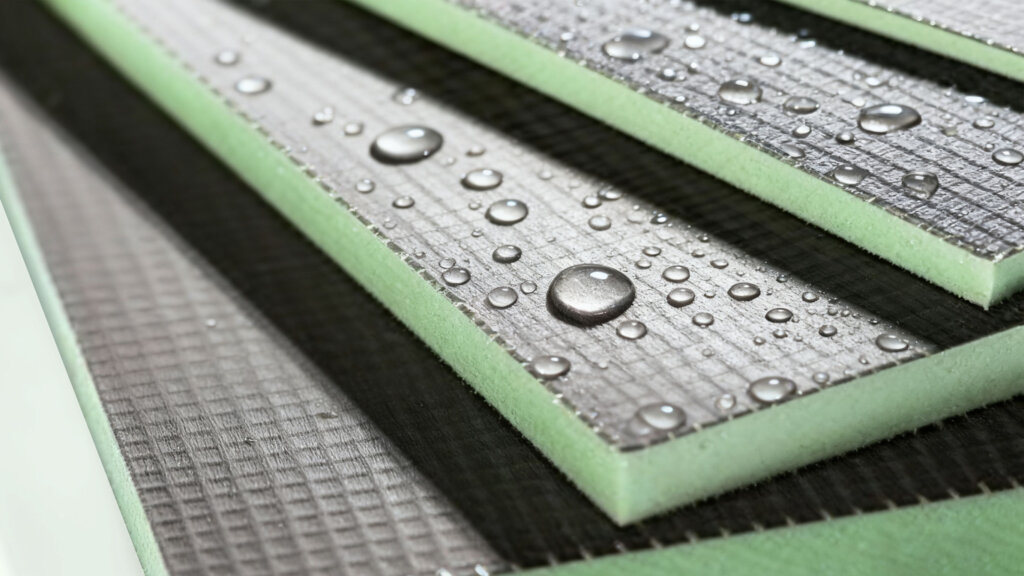
Less than 0.3% water absorption by volume (ASTM C272 test)
Closed-cell structure prevents liquid water penetration
Excellent vapor barrier performance (perms <1.0)
Condensation Control
XPS prevents condensation by:
Raising interior surface temperatures above dew point
Blocking thermal bridges
Maintaining stable thermal resistance
Long-Term Performance Assurance
University of Wisconsin research demonstrates:
Over 95% R-value retention after 15 years
Stable compressive strength
No significant decline in moisture resistance
Performance Comparison
| Feature | XPS | Fiberglass | Spray Foam |
| R-value/inch | R5 | R3.2-3.8 | R6-6.5 |
| Water Absorption | 0.30% | 15-20% | 0.5-1% |
| Service Life | 50+ years | 10-15 years | 25-30 years |
| Compressive Strength | 25-60 psi | Not applicable | 15-40 psi |
| Ice Dam Prevention | Excellent | Poor | Good |
| Installation Difficulty | Moderate | Easy | Complex |
| Material Cost | Moderate | Low | High |
XPS boards hardly absorb any water. They also prevent condensation by raising the wall temperature above the dew point.
Professional Installation Guide
Roof Installation Essentials
Preparation Steps:Verify roof structure capacity (≥40 psf)
Clean and dry the roof surface
Gather specialized installation tools
Installation Process: Start from eaves and work upward, Stagger panel seams, Use specialized sealant on joints, Reinforce edges and corners
Basement Wall Installation
Surface Preparation: Clean walls and repair cracks, Apply moisture barrier coating, Install vapor barrier
XPS Installation: Use approved adhesives (≥40% coverage),Work from corners toward center, Allow for expansion gaps, Seal all seams thoroughly
Critical Details
Eaves increase insulation thickness
Pipe penetrations use specialized sealing kits. Corners use mitered joints
Seams apply high-quality sealant
50Common Installation Issues & Solutions
| Problem | Signs | Solution |
| Panel Gaps | Visible spaces | Use backer rod + sealant |
| Poor Adhesion | Hollow sounds | Increase adhesive coverage |
| Condensation | Surface droplets | Check vapor barrier integrity |
| Thermal Bridging | Localized cold spots | Improve insulation continuity |
Install XPS from the eaves up, seal all seams, and use the right adhesive. In basements, start from the corners and work inward.
Real Project Case Studies
Toronto Home Renovation
- Background: 1950s two-story detached home with persistent ice dams
- Solution: Roof: 150mm XPS insulation. Attic: enhanced ventilation system. Basement: 100mm XPS wall insulation
- Results: Ice dams completely eliminated.32% reduction in heating costs. Indoor humidity maintained at 45-55%.Payback period: 3.2 years
Chicago Historic Building
- Challenges: Masonry construction, no exterior insulation. High water table. Historic preservation requirements
- Solution:100mm XPS on interior walls. Enhanced moisture control system. Custom ventilation design
- Outcomes: Basement humidity reduced from 80% to 45%.28% lower winter heating costs. Preserved building structure. Received local historic preservation award
A Toronto home used XPS and saw ice dams disappear—plus heating costs dropped by nearly a third.
Cost-Benefit Analysis
Initial Investment
For a 200 m² (2,150 ft²) home:
Materials $8,000-$12,000
Labor: $4,000-$6,000
Additional supplies $1,000-$2,000
Total: $13,000-$20,000
Long-Term Savings
Energy costs$1,500-$2,500 annually
Repairsavoid $3,000-$8,000 ice dam repairs
Insurance5-10% discounts in some areas
Indirect benefits
Property value increase3-5%.Better comfortstable temperature and humidity
Health improvement reduced mold issues
Payback Period
Standard 3-5 years
Cold climates2-4 years
Moderate climates 4-6 years
XPS pays for itself in 3–5 years. You save on heating, avoid ice dam repairs, and may even get a break on home insurance.
Regional Guidelines
Climate-Specific Recommendations
Climate Region | Recommended Thickness | Primary Focus | Special Considerations | Target R-Value | Installation Tips |
| Extreme Cold (Alaska, Northern Canada) | 150-200mm (6-8 inches) | Roof insulation continuity | Frost protection Vapor barrier integrity | R-30 to R-40 | Ensure perfect vapor barrier seals |
| Cold Regions (New England, Midwest) | 100-150mm (4-6 inches) | Ice dam prevention system | Ventilation design Thermal bridging | R-20 to R-30 | Focus on eaves and valleys |
| Moderate Regions (Pacific Coast) | 75-100mm (3-4 inches) | Moisture control | Humidity management Condensation prevention | R-15 to R-20 | Ensure proper drainage |
Seasonal Installation Advice
Spring April-June
Fall September-October
Considerations:
Avoid rainy seasons
Winter installations need special measures
Summer requires careful material storage
In cold climates like Chicago or Toronto, use thicker XPS. In milder zones, a standard layer does the job. Always install in dry weather.
Maintenance and Monitoring
Quarterly Inspection Checklist
- Examine roof eaves for ice accumulation during winter months
- Check basement walls for moisture signs or insulation damage
- Monitor energy consumption for unexplained increases
- Verify interior humidity levels remain below 60% RH
Annual Performance Verification
- Conduct thermal imaging scan to identify insulation deficiencies
- Measure basement wall surface temperatures (should be ≥55°F/13°C)
- Verify drainage systems direct water away from foundation
- Check ventilation systems remain unobstructed
Early Intervention Indicators
Unusual increases in heating costs without usage changes
Ice formation at eaves despite exterior temperatures below 25°F (-4°C)
Musty odors or condensation in basement areas
Localized cold spots on interior surfaces
Check your XPS each season. Look for cracks or moisture stains. Keep gutters clean to protect your insulation long-term.
Technical Advantages and Future Trends
XPS Key Benefits
- Overall performance: Combined thermal and moisture protection, Long-term stability, Climate adaptability
- Installation advantages: Relatively straightforward installation, Consistent quality control, Low maintenance requirements
Industry Developments
- Material innovations: Higher R-value products, Eco-friendly blowing agents, Multi-functional composites
- Installation advances: Prefabricated systems, Smart monitoring, Integrated solutions
Why Choose XPS Systems
XPS Performance Specifications for Winter Applications
| Characteristic | Test Standard | Performance Data |
|---|---|---|
| Thermal Resistance | ASTM C518 | R-5 per inch (minimum) |
| Water Absorption | ASTM C272 | ≤0.3% by volume |
| Compressive Strength | ASTM D1621 | 25-60 psi (depending on grade) |
| Vapor Permeability | ASTM E96 | <1.0 perm (semi-impermeable) |
| Service Temperature | ASTM C272 | -40°F to +165°F (-40°C to +74°C) |
Documented Field Performance
Energy Impact: Homes with continuous XPS insulation demonstrate 25-35% reduction in heating costs compared to fiberglass-insulated equivalents (U.S. Department of Energy case studies)
Ice Dam Prevention: Roofs insulated with XPS show surface temperature variations below 2°C, eliminating the 5°C differential that triggers ice dam formation (Canadian National Research Council)
Moisture Management: Basements with XPS insulation maintain relative humidity below 50% even in high water table conditions (University of Wisconsin Field Study)
XPS Compliance with North American Standards
- CAN/ULC S701.1: Type 4 for below-grade applications
- ASTM C578: Standard Specification for Rigid, Cellular Polystyrene Thermal Insulation
- International Residential Code: Compliant for above-grade and below-grade installations
- LEED v4.1: Contributes to Energy Optimization and Material Ingredients credits
XPS gives you all-in-one protection: stops ice dams, insulates damp basements, cuts energy bills, and lasts for decades.